
TRIVETOLOGY
Collecting, cleaning, displaying, researching, and appreciating TRIVETS and related go-withs!
Trivets with a spider theme
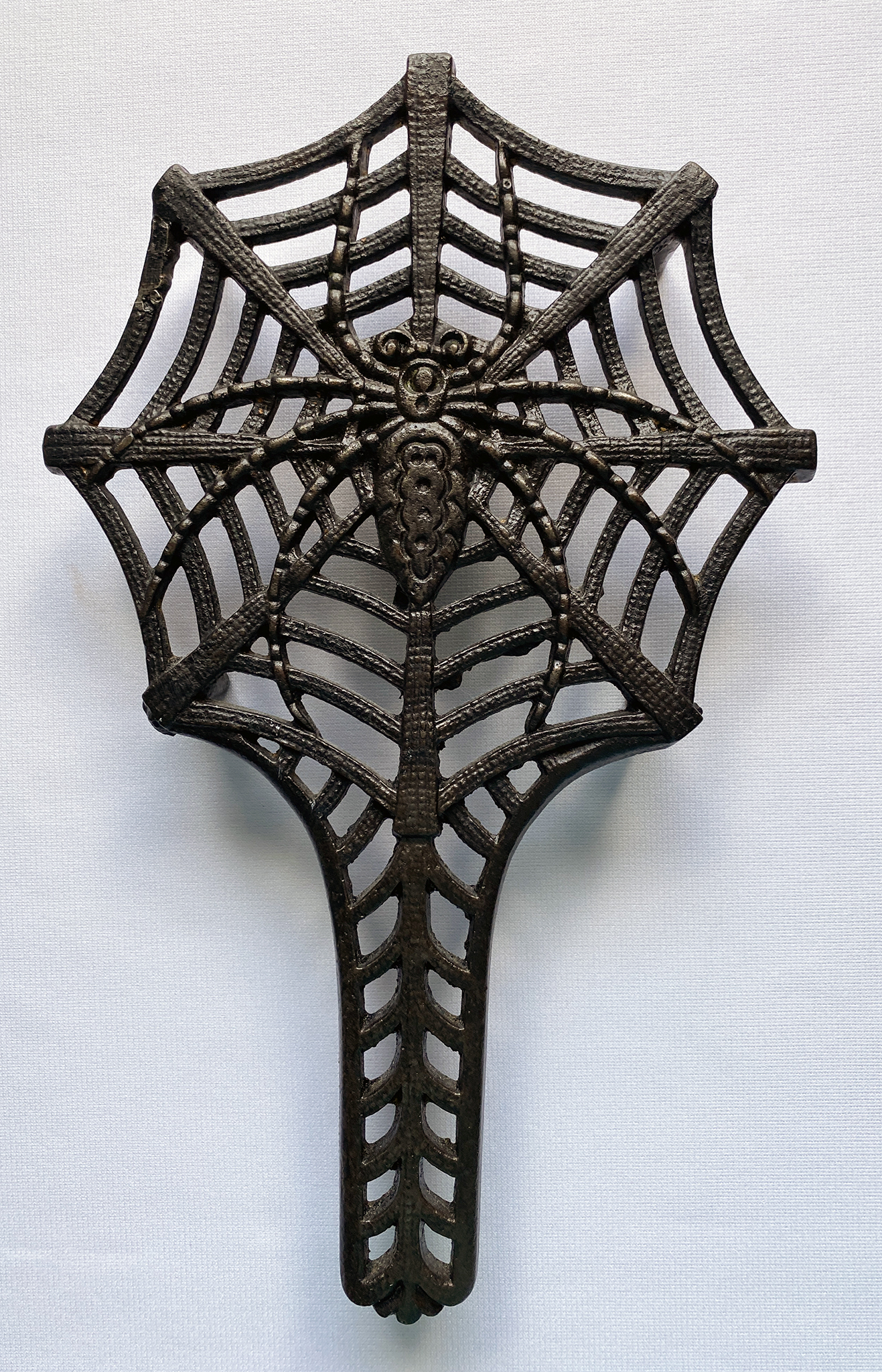
This antique spider themed trivet from the UK is a favorite among trivet collectors. Everyone wants one but they’re extremely hard to find! Most examples exchange hands privately between collectors.
As documented in my second book The Expanded A-Z Guide To Collecting Trivets (2010), p.87:
Cast iron, 9 1/2″ x 5 7/8″ with four 1 1/4″ legs. On reverse: Rd. No. 196845 (for 1892) and bracket device. There is a filed gate mark along the edge. Also documented on p. 132 of Trivets & Stands (Kelly & Ellwood, 1990), rated Very Rare.
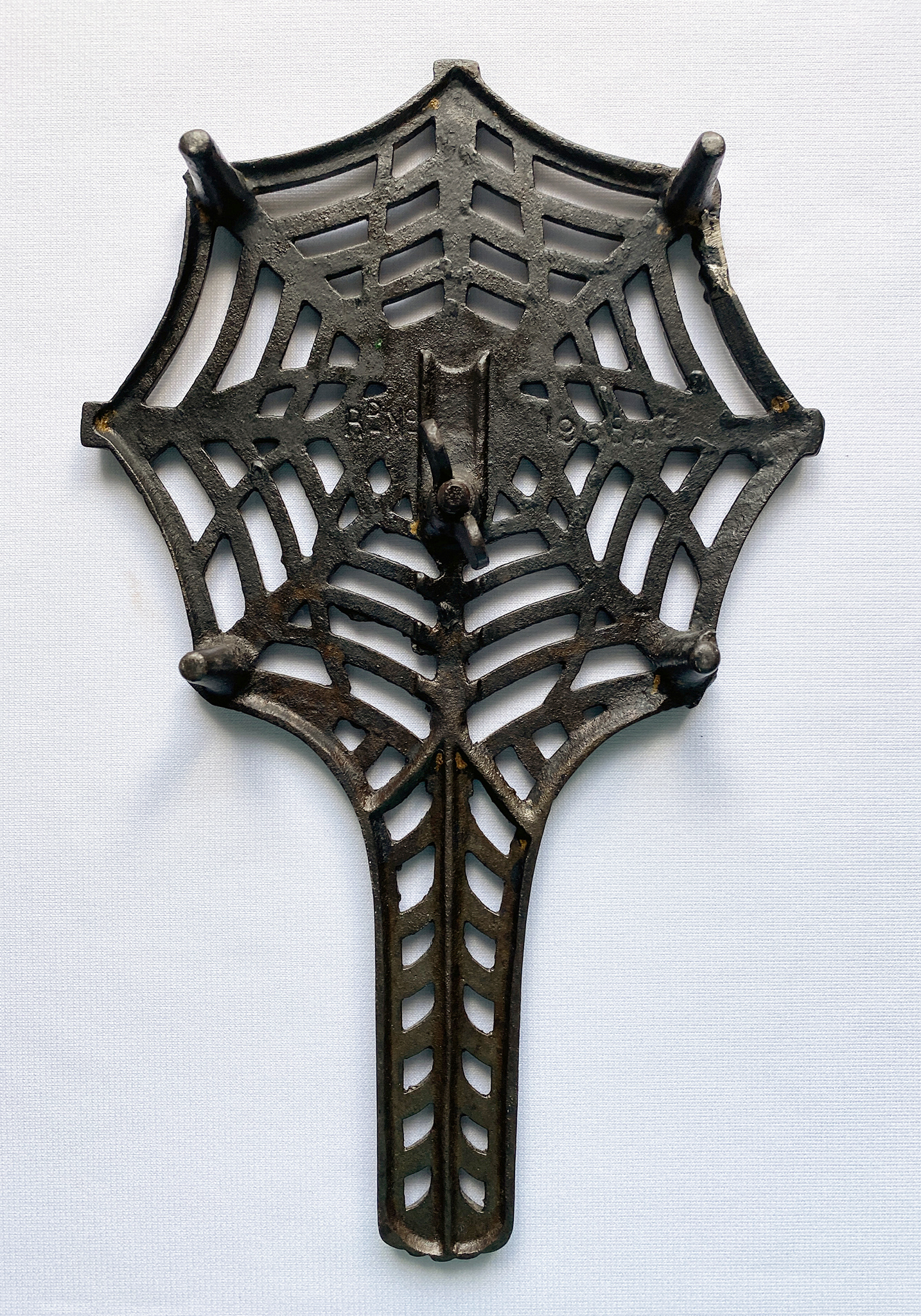
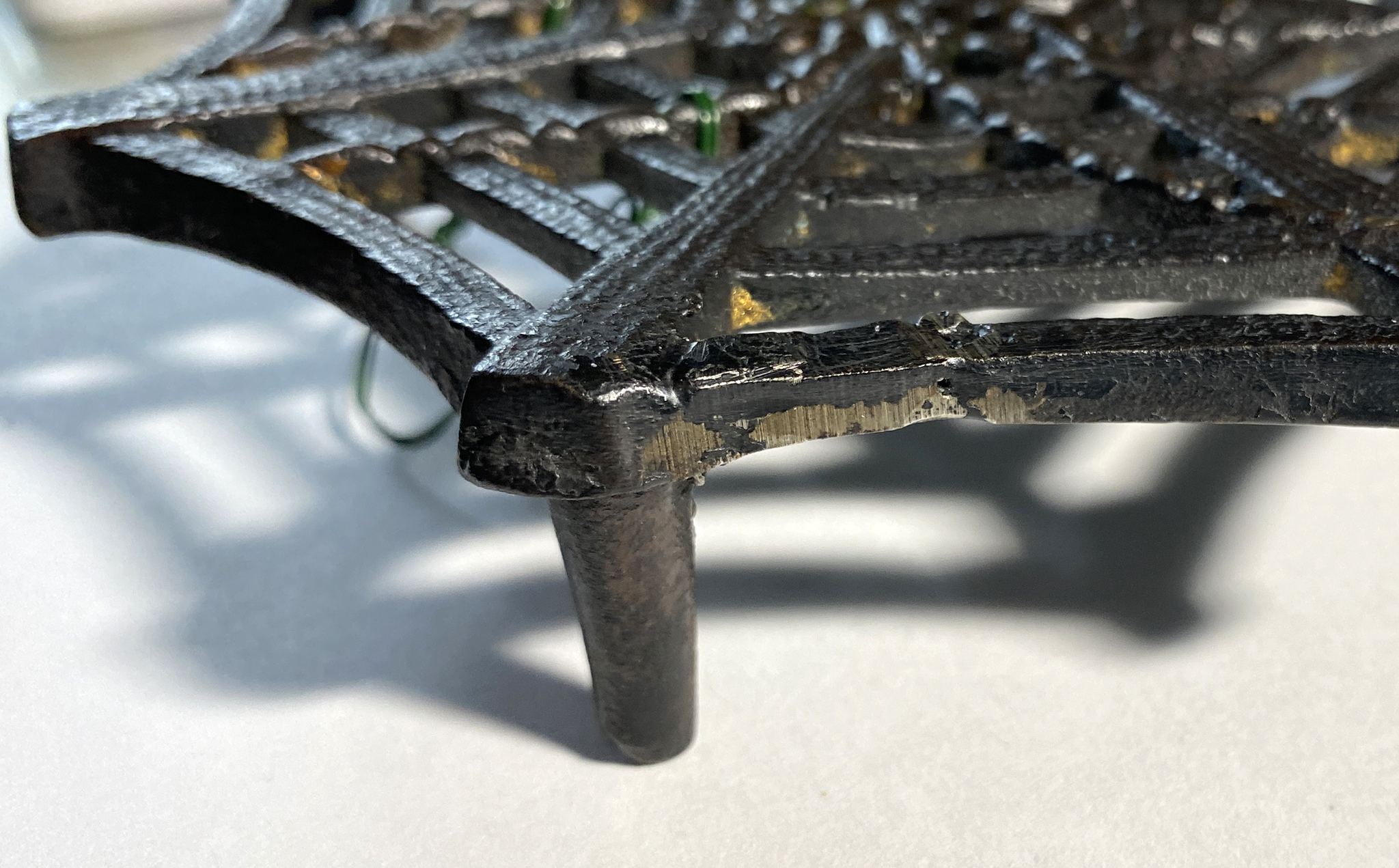
Note the area of the filed gate mark. It feels like a drop or two of solder was applied at that location. Perhaps someone was a bit aggressive with the filing and decided to reinforced the area.
I haven’t found any documentation (in a reference book or company catalog) to identify the designer and/or producer of this trivet. And so far I’ve had no success researching Rd 196845 by utilizing several UK government patent databases. The search continues!
If any reader has information to share, please Contact Me.
Update 7/29/24: Bracket device for Rd 196845
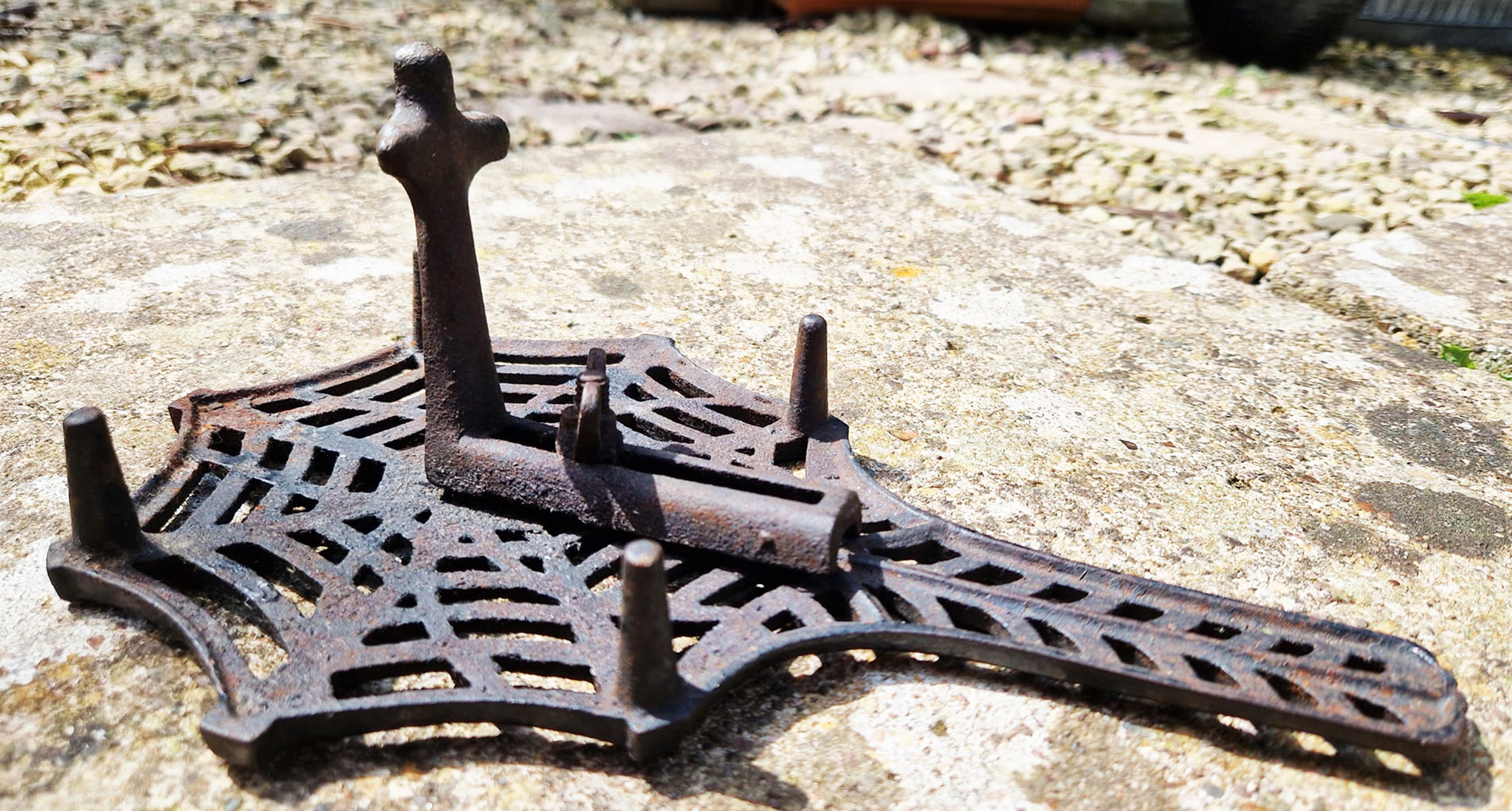
The following reverse image, shared by Kate Fletcher of the UK, shows the complete, original bracket device which allowed this trivet to mount to a parlor stove or fireplace grate.
PS: To display on a table or wall, simply unscrew and remove the sliding bracket.
And if the bracket is difficult to remove? As an easy first step I’d suggest warming the trivet for 15 minutes in a 350 degree oven. The metal will expand slightly, which might loosen the connection. (Warming worked for me earlier this year when a cast iron slug was stuck inside a small slug iron.)
A vintage spider trivet without a handle
This design is fairly common. All the variations I’ve seen have been of cast iron. Some are accent painted to accentuate the spider and the fly.
There are at least two size and signature variations:
● 6 1/2″ in diameter with 4 short feet; TAIWAN and Y INC on the reverse. Note: Taiwan was established in 1949, so this trivet postdates that.
● 7 1/4″ in diameter with 6 short feet; TC and © on the reverse.
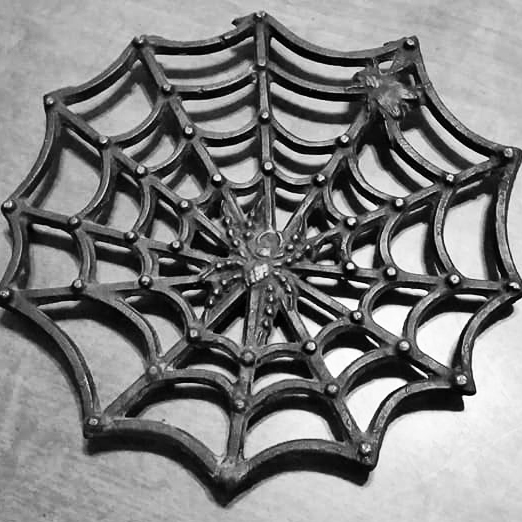
A 6 1/2″ diameter version, shared by Brian Bean.
I value my readers!  Click below to become a Trivetology Follower. Then you'll receive an email notification of each new blog post.
 TRIVETOLOGY