
TRIVETOLOGY
Collecting, cleaning, displaying, researching, and appreciating TRIVETS and related go-withs!
A heavily back-coped trivet from down under
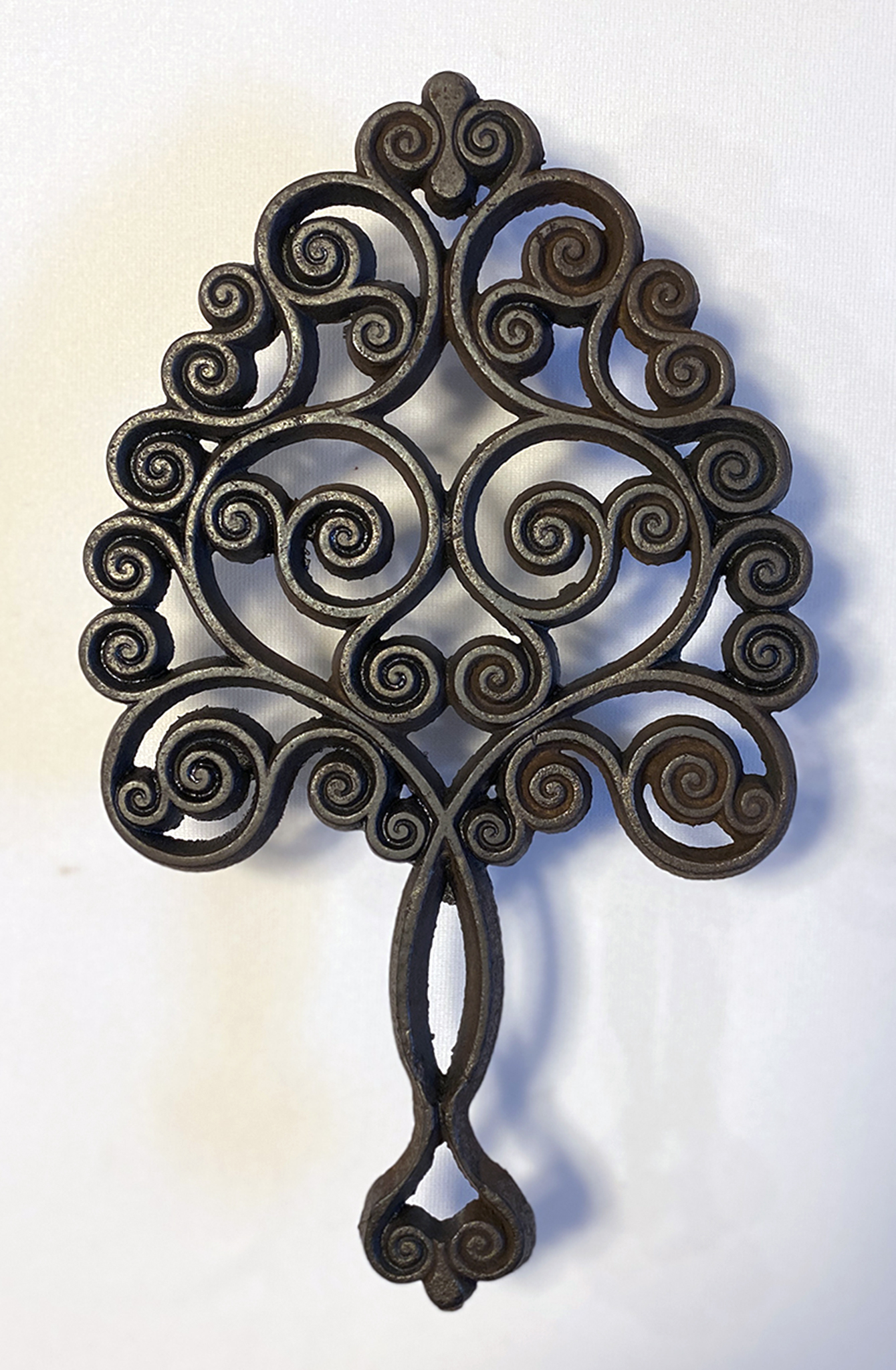
While browsing the Internet a few months ago, I discovered this unusual trivet on eBay Australia. The listing was titled “Vintage cast iron trivet for box iron bygone era Australian antique.” According to the Australian seller, “This particular trivet was used by my mother. I can remember her using it at least 45 years ago but have no idea where she purchased it.”
Since I’d never seen another like it and found nothing similar documented in any of my reference books, I decided to take a chance. The purchase price was AU $49.95 ($31.66 USD) with an additional AU $52.30 ($33.16 USD) for international shipping.

This large trivet was promptly shipped and arrived in only eleven days. After a thorough examination I believe it’s well over 100 years old. Details:
● Cast iron; weight = 13.2 ounces.
● Measurements: 11 3/8″ x 6 3/4″ with three 1 7/8″ round, tapered legs.
● No identifying numbers, letters or makers mark.
● Each decorative swirl is back-coped on the reverse, creating a circular depression about the size of a fingertip. Back-coping is a technique more often seen with antique trivets. The purpose was threefold: to reduce the weight of a trivet; to make the trivet stronger by equalizing the weight distribution; and to make production more affordable, since less metal was necessary.
● Note the 3/16″ diameter sprue mark located on the center reverse. A cast mark of this type typically dates to the mid-1800s or earlier.
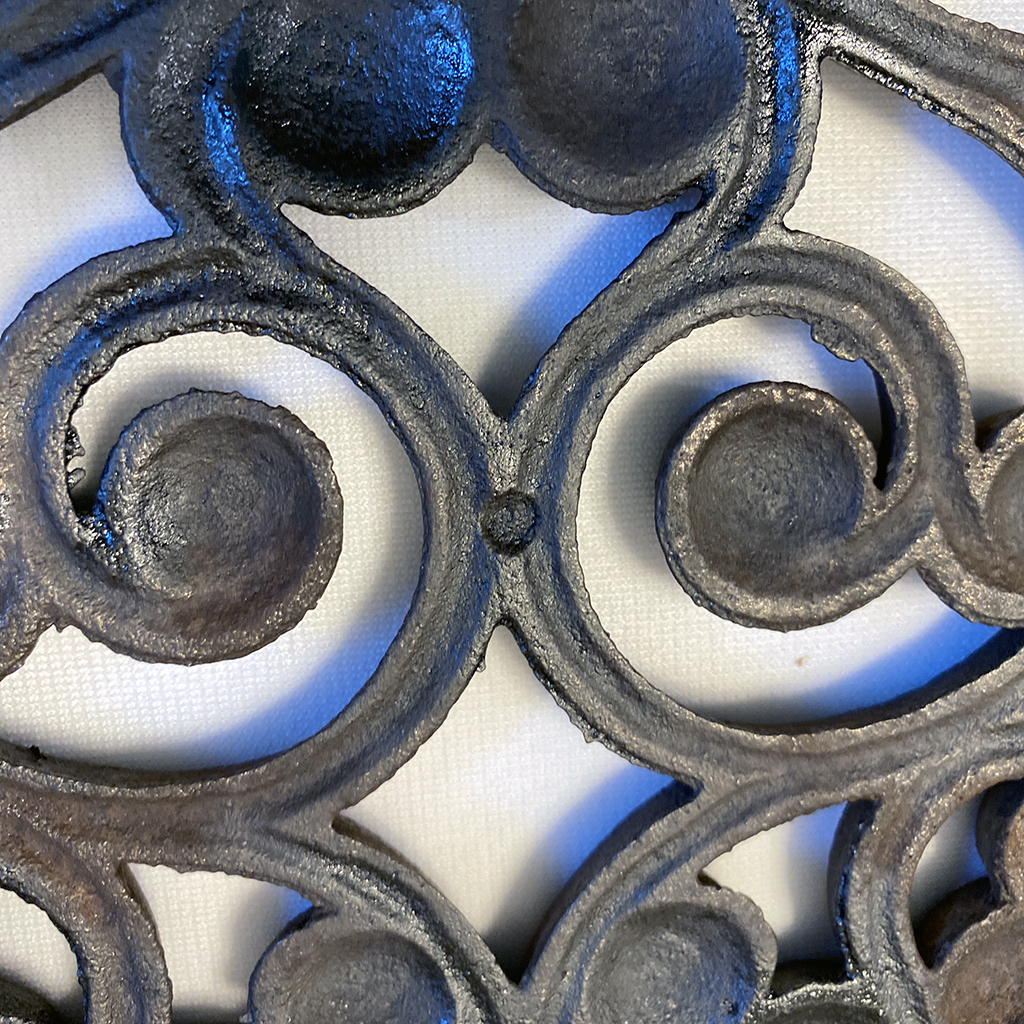
After a thorough cleaning (while humming the tune Down Under) followed by a seasoning in the oven, this handsome trivet is finally display worthy. I’m excited to share my images with other collectors! Has anyone ever seen an oversized casting like this before?

I value my readers!  Click below to become a Trivetology Follower. Then you'll receive an email notification of each new blog post.
 TRIVETOLOGY