
TRIVETOLOGY
Collecting, cleaning, displaying, researching, and appreciating TRIVETS and related go-withs!
Another GW reproduction with a divided handle
Since 2017 the George Washington trivet has been the subject of several other Trivetology blog posts. This will be the fourth, and likely the last, discussion of this interesting trivet design. The other posts:
The original George Washington trivet
George Washington trivet reproductions
Open-handle GW trivet reproductions discovered!
In January 2024 I was emailed by Trivetology reader Lauren Hagood. She was searching for information on a trivet.
“Hi there! I have a George Washington trivet that I’d love to send some photos of. It is incredibly similar to the original 1876, I’m wondering if it could be a rare earlier reproduction. Would so appreciate your insight!”
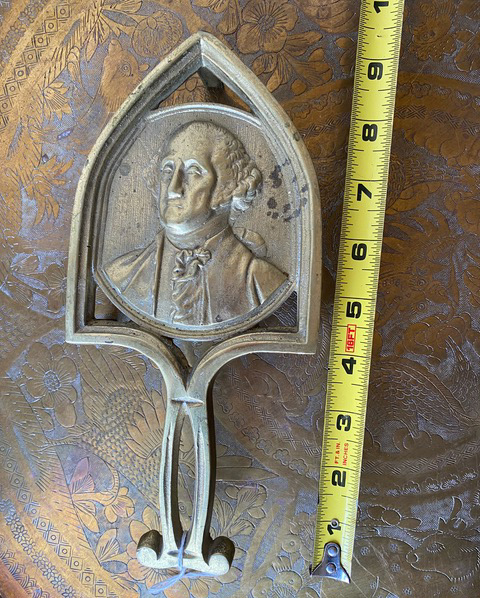
Additional information was then exchanged. I have Lauren’s permission to share her images, and my reply to her follows. I believe it will provide a window into the process I follow when studying and comparing trivets.
Lauren, you have a very nice George Washington trivet! This GW bust design has been very popular through the years but examples with a divided handle are rarely found.
Right away I notice several differences between your GW trivet and the original 1876 casting in my collection.
1. My trivet measures 9 5/8″ x 4 1/2″. Yours appears to measure slightly smaller at 9 1/4” x 4 1/4”. The leg lengths appear to be about the same at 1 1/2”.
2. Your trivet has less detail in the bust.
3. The background texture (above the shoulders and around the head) differs.
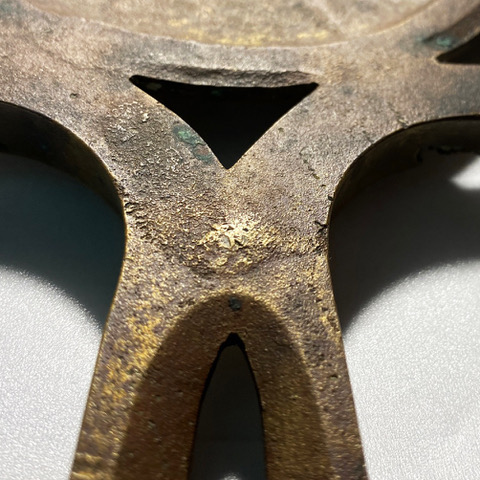
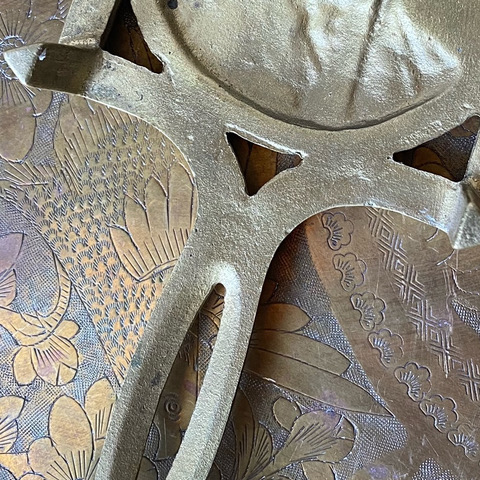
4. I’m not seeing a definite sprue mark on the reverse of your trivet … perhaps a ghost shadow of one?
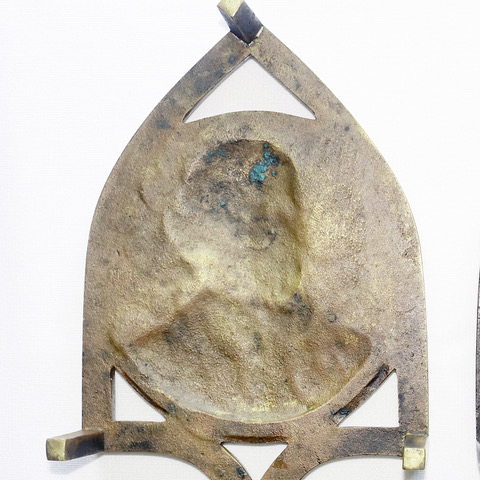
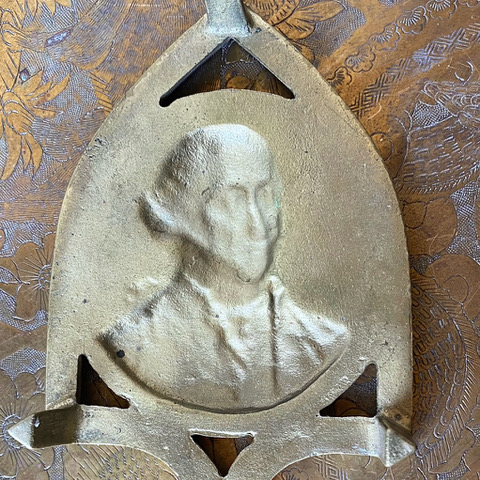
5. The panel reverse does not look putty-like as mine does.
For all these reasons I believe your trivet may represent a recast of the original design. Let’s discuss this further.
Discussion
A. Recall the rule of One Size Smaller: when a trivet is used as a pattern, any resulting reproductions from that pattern would be slightly smaller due to the shrinkage of molten metal after cooling. This phenomenon is discussed in the blog post Reproduction vs antique.
B. Compare the face on my trivet (1st below) to yours (2nd below). Some of the fine detail, especially in the eyes, nose and lips, is muted on your trivet. A recast rarely captures the same degree of sharpness as the original trivet. Is that the reason for the difference, or is it due more to age related surface wear as compared to my near mint condition example?
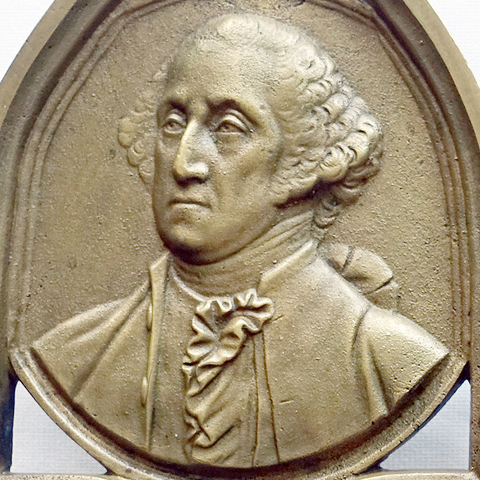
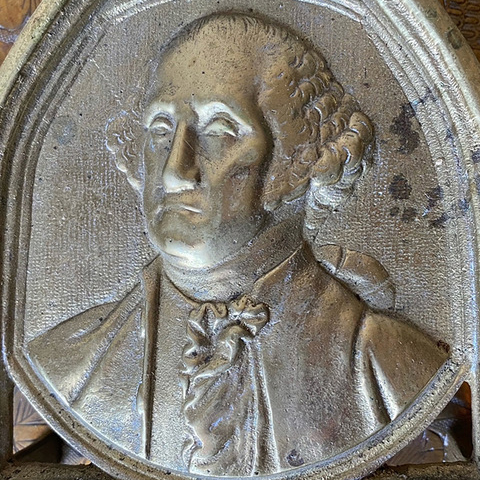
C. Compare the background texture. Mine (1st below) is slightly grainy but smooth while yours (2nd below) has a linear texture.
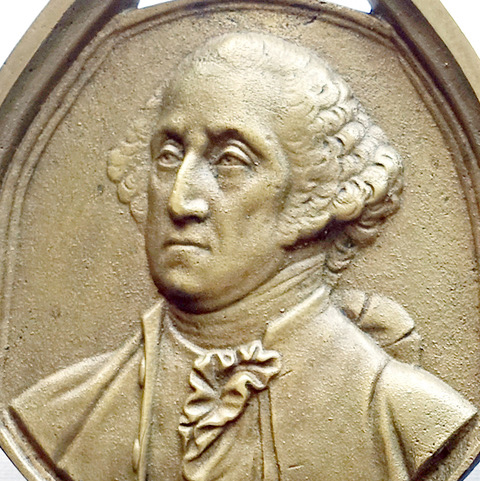

D. Compare the area on the reverse near where the handle begins. There is a palpable, raised round sprue (cast) mark on mine (1st below) . Yours trivet (2nd below) appears smooth in that area, maybe with a shadow of a sprue. That effect is sometimes called a ghost mark, a faint hint of a cast mark that transfers over when another trivet is used as a pattern.
E. Finally, the hallmark of the original GW casting is the putty-like appearance of the panel reverse. That pattern was hand-molded from a soft medium, either wax or clay. Note the swirls in the brass along with evidence of fingerprints on mine (1st below). Compare that with your trivet (2nd below) where the George Washington bust impression has transferred from the front through to the back.
I value my readers!  Click below to become a Trivetology Follower. Then you'll receive an email notification of each new blog post.
 TRIVETOLOGY