
TRIVETOLOGY
Collecting, cleaning, displaying, researching, and appreciating TRIVETS and related go-withs!
Carron No. 6 sad iron stand
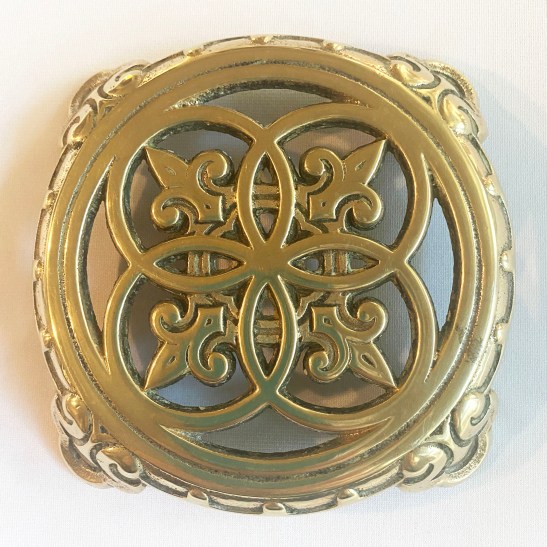
This lovely antique Carron brass sad iron stand (trivet) was discovered on eBay UK and purchased in June 2023.
The Carron Company was founded in Falkirk, Scotland in 1759. It continued in operation for over 220 years, closing in 1982. A comprehensive history by Brian Watters (2005) entitled Carron Company appears on the Falkirk Local Historical Society’s website.
The front features four fleurs-de-lis within overlapping circles. Four slanted leg supports extend the total diameter to 7 1/4″. This stand is thickly cast and heavy, weighing 1 pound 6.5 ounces.
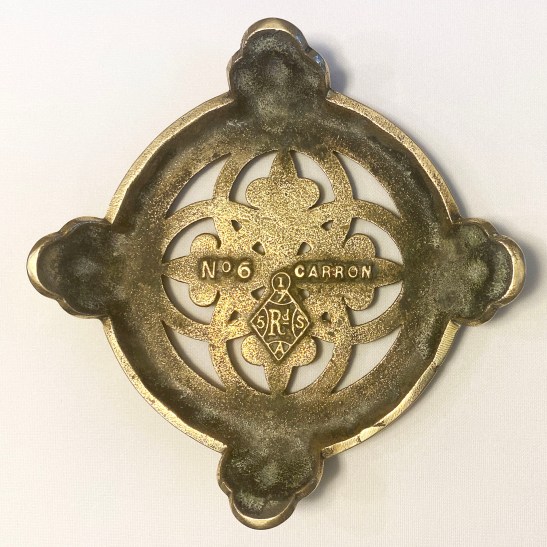
On the reverse, along the edge at 5 o’clock, is what may represent a filed gate mark. In raised lettering is the signature No 6 CARRON and a well-defined Rd Diamond with the design registration date of December 7, 1875. Zoom in to better visualize the Rd Diamond.
Please refer to Kovels English Registry Marks for a comprehensive explanation of the British Rd systems.
By the placement of the numbers and letters I recognize this to be a 2nd Series Diamond, Compare my stand’s Rd Diamond (above) to the 2nd Series diagram (below).
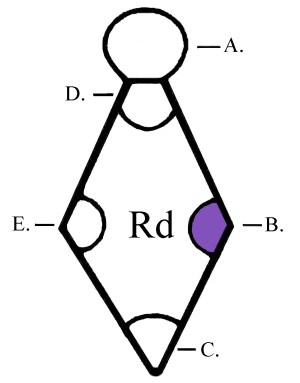
A: Materials (Roman numeral I = Metals)
B: Year (the letter S = 1875)
C: Month (A = December)
D: Day of Month (7)
E: Bundle Number (production number = 5)
A Question regarding Rd Diamond and Rd Number signatures
An Rd mark indicates the date a design was originally registered. An Rd Diamond was assigned in the UK during the years 1868 to 1883. Beginning in 1884 Great Britain updated to a Rd Number system.
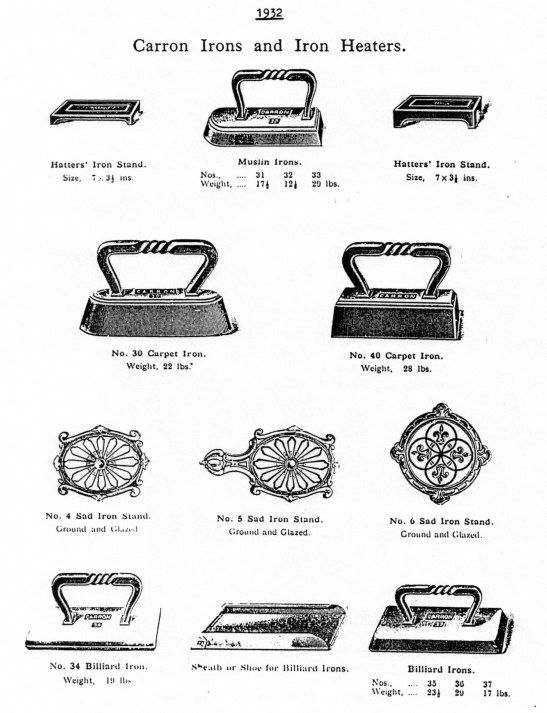
The production of some popular Carron designs continued for decades. This Carron No. 6 stand was still being sold as of the 1932 Carron Catalog. Included in that same catalog are two other early registered Carron designs with Rd Diamonds: No. 4 and No. 5. Those two stands are discussed at the beginning of my 9/16/21 blog post.
QUESTION: As time passed and Carron continued to reissue their most popular designs, would the original Rd Diamond or Rd Number still appear on the reverse? Or would castings produced years later (like the three stands advertised in 1932) drop the registration information and simply be marked CARRON No. 4, CARRON No. 5 or CARRON No. 6?
If you have the knowledge to address this question, please Contact Me and I’ll share that information in a future blog post.
Cleaning antique brass
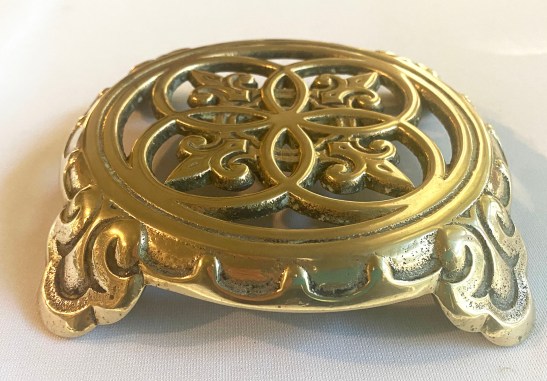
This stand was obviously polished frequently through the years, as evidenced by the thick, hard, dark residue embedded in the crevasses. The most likely culprit? Brasso, popular worldwide since its development in 1905. It’s an abrasive, petroleum-based polishing agent with the potential to mar metal over time; I avoid using it. For a further discussion of best practices for cleaning and polishing, see my blog post Caring for brass, bronze and copper trivets.
Update 1/15/2024
To continue this discussion, see my blog post Rd Diamond and Rd No. markings.
I value my readers!  Click below to become a Trivetology Follower. Then you'll receive an email notification of each new blog post.

