
TRIVETOLOGY
Collecting, cleaning, displaying, researching, and appreciating TRIVETS and related go-withs!
Methods for cleaning and restoring metalware

Whenever a collector acquires a trivet, stand, or pressing iron it often needs some attention before being placed on display. This blog post discusses the methods commonly used to clean and restore metalware.
My article Cleaning Trivets is shared at the PITCA website.
Electrolysis is a popular cleaning technique among cast iron collectors. If using a home E-Tank intrigues you, the Internet provides a lot of helpful information. Electrolysis Tank Basics by Cast Iron Cookware is one of the best videos I’ve watched on YouTube. On Facebook, the special interest group Electrolysis Tank Builders is highly recommended. And “The Most Detailed and Illustrated Tutorial on the Web!” appears on the Metal Detecting World website.
⚠️ Be sure to understand the process and follow all safety precautions when setting up and operating an E-Tank.
Two weeks ago I posted this call to action at the Facebook group The Trivet Collectors Network and five members responded. Many thanks to the following collectors who contributed to this blog post!
Charles Cormier, New Hampshire
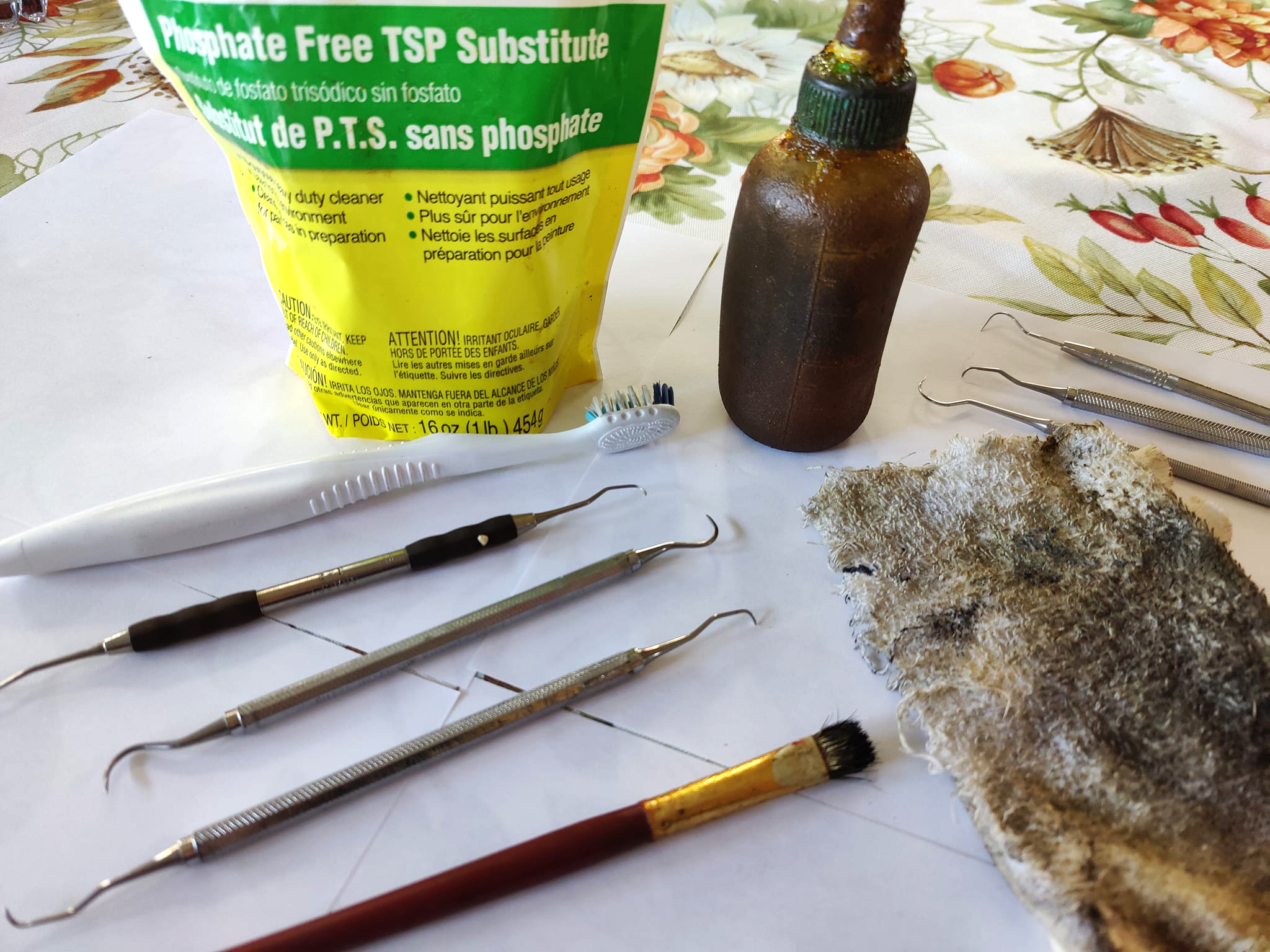
Things I have used when cleaning and restoring old cast iron trivets.
● Paint remover, for paint not original to the trivet.
● Trisodium Phosphate (TSP), for removing grease and stove black. FYI – Phosphate Free TSP substitute is a heavy duty cleaner equivalent to TSP for use where state and local regulations prohibit the sale of phosphate cleaners.
● An old tooth brush comes in handy.
● A dental pick for tight spots, being very careful not to scratch or remove any patina.
● 0000 (4-0) steel wool, to remove what’s on the surface. Be careful not to scratch, shine, or create a new surface.
● I brush on a mixture of 2 parts linseed oil + 1 part turpentine, thoroughly wiped with a rag as a finishing touch.
Lance Laudig, New York
I clean all my cast iron trivets by electrolysis. Fast and easiest way to do them. I started using electrolysis when I decided to start reselling cast iron eight years ago and just researched it on all the cast iron Facebook sites as well as a couple of web sites dedicated to it.
Very simple to set up and very cost effective to operate. The biggest advantage to using it is it removes everything from the cast iron including rust, paint and old seasoning. It’s a one step process. Most pieces take less than 24 hrs to clean; some only a couple of hours.
Scrub them once at the end with a SOS pad or Brillo pan with dish soap and cold water and rinse in cold water and dry them before you refinish them. Using cold water is important as it really helps prevent flash rust.
Dale Libb, Ohio
In collecting trivets, skillets and old iron I was searching for a way to clean the rusty, greasy pieces. I tried soaking in white vinegar then cleaning with a toothbrush. For light damage this works, but you need to take care not to leave the piece soaking for a long period of time, due to the vinegar being corrosive. I then tried Easy Off oven cleaner, coating the item then placing it in a plastic bag to soak. It was effective but very messy.
One day searching YouTube I discovered electrolysis. I followed the setup instructions and have never looked back. This method won’t heal cracks or pitting. It removes rust, grease, paint etc … and takes the piece back to bare metal without harming it. I’ve been using this method for the past 10 years and it never ceases to amaze me. I’ve done pieces from the 1800’s that in the end look brand new.
Once the piece is stripped I apply a very light coat of oil to deter rusting. In choosing your oil, look for something with a high smoke point. For skillets, select oils such as avocado, flax or grape seed. For trivets, oils like canola or crisco are fine but avoid olive oil. The key to this part of the seasoning process is to only use a very light coat of oil. More is not better; it will turn brown and gummy.
I place the piece in a cold oven, turn the selection to bake at 400 degrees. Once it reaches temperature I let the piece sit for 1 hour then turn the oven off. Do not remove the piece until the oven has cooled naturally. Cast iron is a ferrous metal; this process lets its pores open and close and absorb the oil. Depending on the desired look (and how dark you want your piece to get) determines how many times you repeat the seasoning process. I usually do this 3 times.
Joe Spence, New Jersey
For me, it depends on what needs to be removed and what the trivet is made of. I generally buy only cast iron trivets but I do have some brass and aluminum pieces as well. The following information is for cast iron only.
If it is just paint, I will soak it in a lye bath. My lye bath is 2 pounds lye to 5 gallons of water. Let it soak for 24 hours, then remove and scrub with a wire brush. Repeat if necessary. Be sure to use eye protection and gloves. Lye will burn your skin pretty quickly.
If it is rust, I use either Evapo-Rust or my electrolysis tank. Once the piece is clean and dry, then I will either paint flat black/matte clear or season as you would any cast iron cookware. Painted trivets are for decoration only; the seasoned ones are used on the table for hot dishes.
Lately, I have been keeping the trivets as found except for washing in soap and water. I have been enjoying the patina and originality.
Diane Wheeler, Arkansas
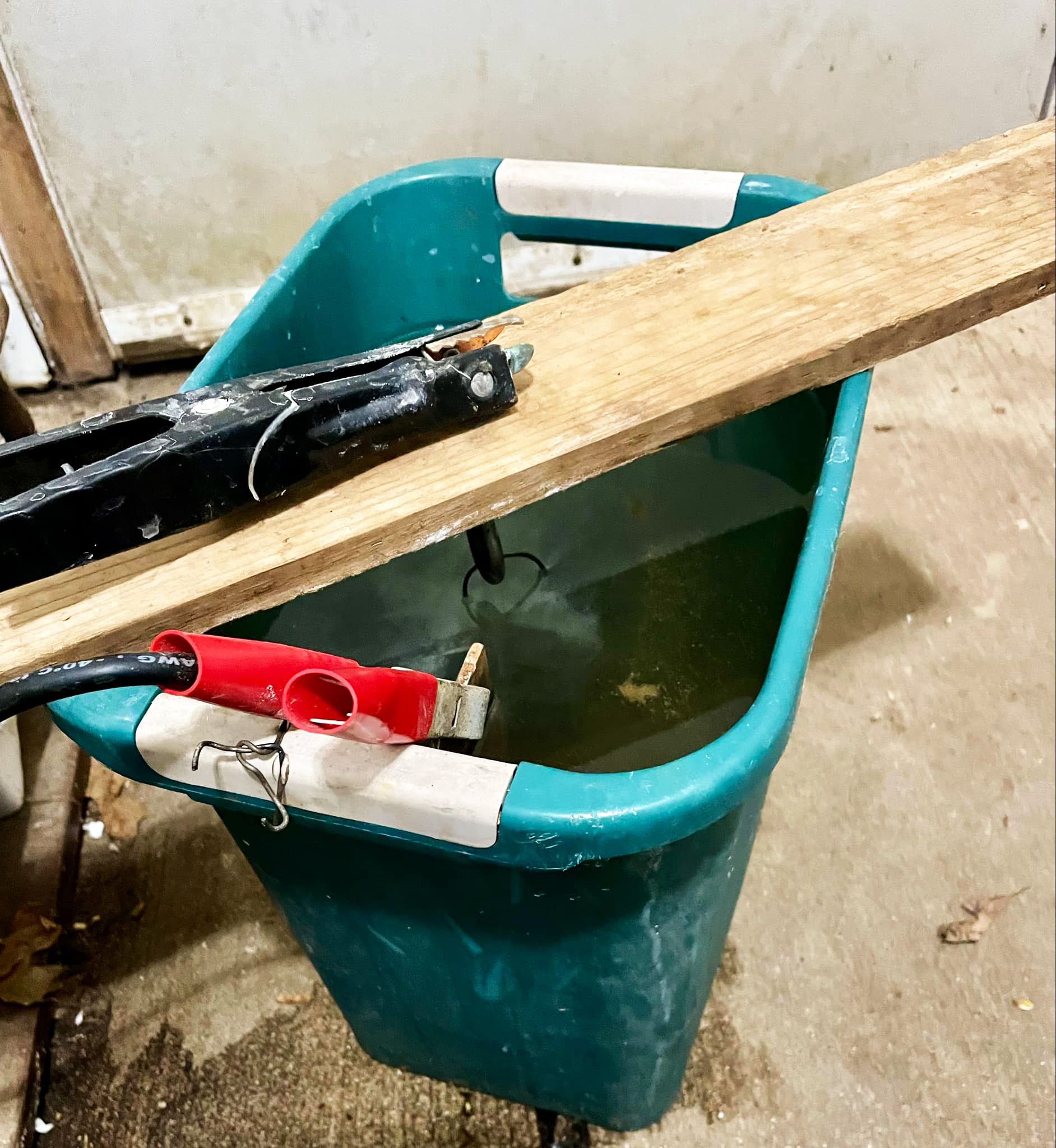
The very best way to clean and restore cast iron – as long as there is no wood or brass on it – is by electrolysis. An E-Tank will remove all paint and rust from a cast iron trivet. Once it’s seasoned, it’s like new. I built my first e-tank in a 5 gallon trash can, as shown.
Related Trivetology blog posts
● Caring for cast iron trivets
● Caring for brass, bronze and copper trivets
● Vintage Pal-Bell brass trivets
● Rub While The Iron Is Hot
I value my readers!  Click below to become a Trivetology Follower. Then you'll receive an email notification of each new blog post.
 TRIVETOLOGY